
Groundworks typically account for a high percentage of self-build costs and are notoriously challenging to estimate before work commences. Final pricing depends heavily on site variables. Subsurface conditions, tight site access, complex drainage layouts, and the sheer volume of soil requiring off-site disposal all directly impact the final total.
For a typical three or four-bedroom detached self-build, a reasonable early budgeting allowance for a complete groundworks package is around £25,000 to £45,000, based on national 2026 cost averages and a relatively straightforward site.
Challenging plots can push the cost beyond £50,000, particularly where deeper foundations, extensive drainage, difficult access or large quantities of spoil are involved.
Importantly, early estimates should always be treated as a guide. Site investigations, engineering details and the involvement of an experienced groundworks contractor will provide a much clearer figure once the plot and proposed build are properly understood.
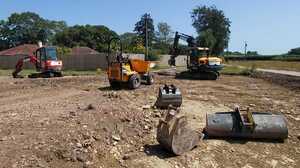
Groundworks cost breakdown for a self-build
A complete groundworks package handles the entire substructure phase, beginning with site excavation and finishing once the plot is fully prepared for the main building contractors to take over.
For a typical UK self-build, indicative 2026 budgeting ranges might look like this:
- Site clearance and setting out: £1,500 to £4,000
- Excavation and muck away: £3,000 to £8,000
- Foundations: £5,000 to £12,000+
- Blockwork to DPC: £3,000 to £7,000
- Drainage connections: £3,000 to £8,000
- Service ducts and trenches: £1,500 to £4,000
- Hardstanding and site access: £3,000 to £10,000+
Figures vary considerably between projects and should be used for initial budgeting rather than as a quotation.
Site clearance may involve removing vegetation, old structures, concrete, unsuitable material and topsoil before the building can be accurately set out. Excavation then creates the formation levels, foundation trenches and any required drainage or service runs.
Muck away can become a substantial part of the excavation cost. Clean material that can be reused elsewhere on the plot reduces haulage and disposal charges, while unsuitable soil that must leave the site adds transport, loading, and disposal costs.
Foundation work usually includes excavation, concrete and associated plant. Blockwork is then constructed up to damp-proof course level, creating the base from which the main structure can continue.
Drainage, service ducts and temporary or permanent access can also form part of the same package. Sibley Contractors provides groundworks alongside civils and drainage services across Somerset and the South West, allowing these connected stages to be planned within a single, coordinated schedule.
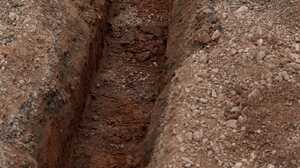
What affects the cost of groundworks?
Ground conditions are one of the biggest variables. Firm, stable ground that can accept conventional foundations is typically more straightforward and cheaper to work with than soft, made-up, or unstable ground.
Groundworks in Somerset must frequently account for clay soil – which can change volume as its moisture content changes. Nearby trees, meanwhile, can compound the issue by absorbing groundwater, further destabilising the ground conditions. Foundation depth and design may therefore need to respond to site conditions.
A high water table can create additional excavation and drainage requirements. Sloping land may require more excavation, retaining structures or changes in level, while poor access can restrict machinery and increase labour time.
Spoil removal also requires careful consideration when budgeting, but excavation itself is just part of a wider job – material then has to be reused, moved elsewhere on the site or transported away.
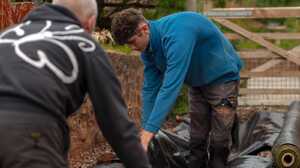
What is normally included in a groundworks package?
A typical package can include setting out, site preparation, excavation, foundations, oversite preparation, blockwork to DPC, below-ground drainage, service trenches and ducts, and access or hardstanding.
The exact scope needs to be clear before quotes are compared. Some prices may exclude spoil disposal, concrete pumping, imported stone, utility connection fees, specialist foundation designs or retaining structures.
Checking the inclusions line by line gives a much more useful comparison than looking at the total figure alone.
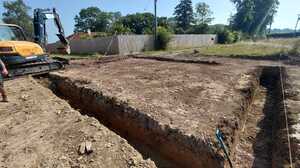
How much do footings cost per metre?
Published UK cost data for 2026 puts machine-dug strip foundations at around £95 to £115 per linear metre, with trench-fill foundations at approximately £130 to £160 per linear metre.
Hand excavation can increase the figure considerably, with restricted access and difficult working conditions adding further labour.
Foundation design should come from the project engineer and be agreed with Building Control. Depth, width, concrete specification and reinforcement requirements can all affect cost.
How long do groundworks take for a self-build?
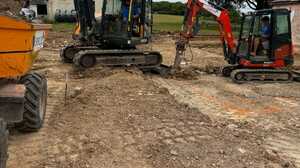
A straightforward self-build groundworks package will often take around two to four weeks, although larger or more complicated sites can take considerably longer.
Weather, ground conditions, inspections, concrete schedules and drainage work can all influence the programme. Heavy rain can be particularly disruptive once excavation has started, especially on clay-rich sites.
Allowing some flexibility in the build schedule can prevent later trades being booked too tightly against an estimated completion date.
Can you dig your own foundations?
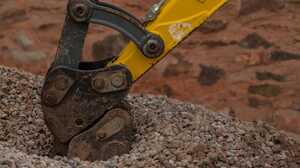
Some self-builders choose to carry out elements of excavation themselves, particularly when they have machinery experience and suitable access.
Foundations still need to follow the structural design and satisfy Building Control before concrete is poured. Errors in depth, levels or trench position can be expensive to correct, and poor excavation can increase the amount of concrete required.
For most self-build projects, professional excavation provides greater control over levels, spoil management and the coordination of drainage and services.
Why can groundworks cost more than expected?
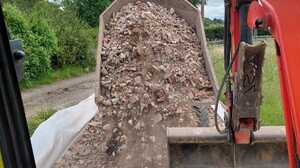
Because the vast majority of groundworks infrastructure is buried below ground, the scale of the operation can be difficult to appreciate from drawings alone. But excavators, dumpers, stone, concrete, drainage materials, haulage, labour and waste disposal all contribute to the accumulating costs.
Unforeseen ground conditions can add to budget uncertainty, as the precise nature of the soil and geology frequently only becomes clear during the initial digging phase.
A detailed quotation, appropriate site investigation and a contingency within the overall build budget give self-builders far greater control. Careful and timely planning of the groundworks also helps drainage, services, access, and foundations work together efficiently as the build progresses.
Planning a self-build in Somerset?
Sibley Contractors provides groundworks, excavation, drainage, and civils services for self-build projects across Somerset and the wider South West. From initial site preparation and foundations through to drainage, service runs and access, the team can help you plan each stage around the conditions on your plot.
If you are budgeting for an upcoming self-build and would like to discuss the groundworks required, speak to our team for a quote.
Posted by Luke Clark on November 9th 2026
 Updating page...